Skip to content
Best Picks Guide
5 Produkte getestet

Best Gaming Monitors 2026

We tested the top gaming monitors on response time, refresh rate, color accuracy, panel technology, and input lag — from budget 1080p displays for competitive gaming to premium 4K OLED panels for immersive single-player experiences.

Zuletzt aktualisiert: 11. April 2026

#1
Top Pick Deal
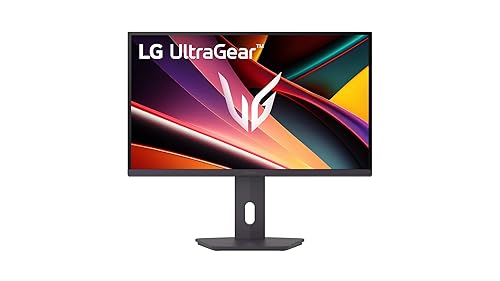
LG 27GP950-B UltraGear 4K 144Hz gaming monitor
$699.00 $799.00

“Best 4K gaming monitor 2026 — the reference display for PS5/Xbox Series X and PC gamers who want 4K at 144 Hz. The only monitor in this test with true 4K@144Hz and HDMI 2.1.”

  • 4K resolution at 144 Hz — the best combination for immersive gaming
  • Nano IPS panel — wide color gamut (98% DCI-P3) and accurate colors
  • 1 ms GtG response time — competitive-grade responsiveness at 4K
  • Expensive at $699 for 27 inches
  • IPS glow visible in very dark scenes
  • No built-in USB hub
#2
Deal
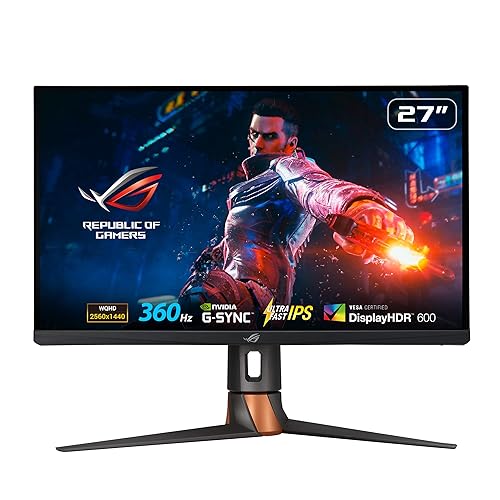
ASUS ROG Swift PG27AQN 360Hz gaming monitor
$799.00 $899.00

“The best competitive gaming monitor 2026 — 360 Hz at 1440p for the highest frame rate advantage. For esports and competitive gaming, this is the reference display.”

  • 360 Hz refresh rate — the highest in this test, for maximum competitive advantage
  • 1440p resolution — better visual quality than 1080p at 360 Hz
  • G-Sync and native support — zero tearing at any frame rate
  • Most expensive monitor in the test ($799)
  • 360 Hz requires very high frame rates (RTX 4080+ for most games)
  • No HDMI 2.1 — console gamers limited to 60 Hz
#3
Deal
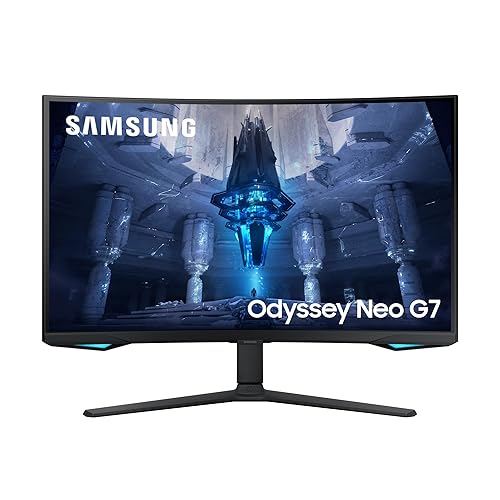
Samsung Odyssey G7 32-inch curved gaming monitor
$549.00 $649.00

“The best 32-inch curved gaming monitor — immersive 1000R curve, 240 Hz, and Samsung Quantum Dot colors make it the top choice for single-monitor immersive gaming setups.”

  • 32-inch 1000R curved panel — most immersive screen in the test
  • 240 Hz at 1440p — excellent for competitive and cinematic gaming
  • Samsung Quantum Dot technology — vibrant, accurate colors
  • 1000R curvature is polarizing — not ideal for multi-monitor setups
  • VA panel has slower response times at the edges than IPS
  • No USB-C connectivity
#4
Deal
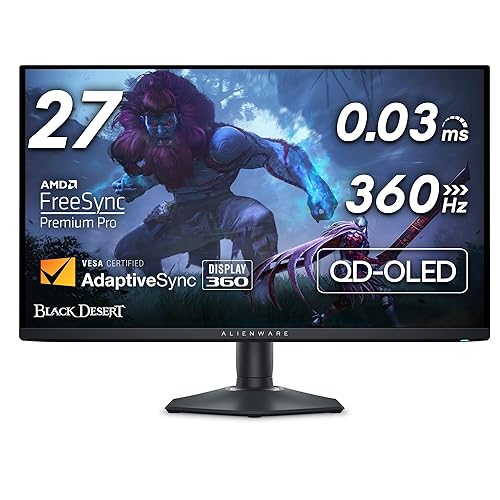
Dell Alienware AW2725DF QD-OLED gaming monitor
$699.00 $799.00

“The best OLED gaming monitor 2026 — QD-OLED infinite contrast, 360 Hz, and near-zero response time deliver an experience that IPS panels cannot match. Worth the premium for discerning gamers.”

  • QD-OLED panel — infinite contrast and near-zero response time (<0.1 ms)
  • 360 Hz at 1440p — ties ASUS ROG Swift for the fastest QHD OLED available
  • Stunning visual quality — best color volume in the test
  • OLED burn-in risk for static elements (e.g., health bars, minimaps)
  • Expensive at $699
  • Not as bright as IPS in well-lit rooms (650 nits peak SDR)
#5
Deal
BenQ MOBIUZ EX2710Q 27-inch 165Hz gaming monitor
$279.00 $349.00

“The best budget gaming monitor 2026 — $279 for 1440p at 165 Hz, accurate IPS colors, and BenQ's build quality. The obvious choice for gamers upgrading from 1080p/60 Hz on a budget.”

  • Best value gaming monitor in the test ($279)
  • 1440p at 165 Hz — the ideal balance of quality and performance
  • IPS panel with accurate colors out of the box
  • 165 Hz vs. 240 Hz+ competitors — noticeable difference for competitive players
  • No G-Sync native (FreeSync Premium Pro only)
  • Built-in speakers are average quality

Buying Guide

The three critical specs for a gaming monitor are response time (1 ms GtG or lower for competitive play), refresh rate (144 Hz minimum, 240 Hz for esports, 360 Hz for top-tier competitive), and panel type. IPS panels offer the best color accuracy and viewing angles with fast response times — the sweet spot for most gamers. OLED delivers infinite contrast and near-zero response times at a premium price. TN panels are fastest but inferior in color and viewing angles. Always check for VRR support (G-Sync Compatible or FreeSync Premium) for tear-free gaming without vsync latency.

Frequently Asked Questions

What is the best gaming monitor in 2026?
The LG 27GP950-B is our top pick for 4K gaming: 4K 144 Hz Nano IPS, 1 ms response, HDMI 2.1 for PS5/Xbox, and G-Sync Compatible. Best for competitive 1440p: ASUS ROG Swift PG27AQN with 360 Hz. Best budget: BenQ MOBIUZ EX2710Q at $279.
What resolution should I get for gaming in 2026?
1080p at 240+ Hz for esports (CS2, Valorant, Apex). 1440p at 144–165 Hz for the best balance of quality and performance — the most popular choice for mainstream gaming. 4K at 60–144 Hz for single-player and cinematic games if you have an RTX 4080/4090.
Is a 144 Hz monitor enough for gaming?
144 Hz is excellent for most gamers and a massive upgrade from 60 Hz. You'll see noticeably smoother motion, reduced blur, and better responsiveness. Only consider 240 Hz+ if you play competitive titles professionally or semi-professionally, or if you have the GPU to maintain 240+ fps consistently.
OLED vs IPS for gaming — which is better?
OLED wins on contrast (infinite black level), response time (<0.1 ms), and visual impact. IPS is brighter (better in lit rooms), cheaper, and has no burn-in risk. For competitive gaming: fast IPS. For single-player and cinematic experiences: OLED is transformative if budget allows.